
Tighten up the rails and replace some rotted wood in Hudson
September 30, 2026
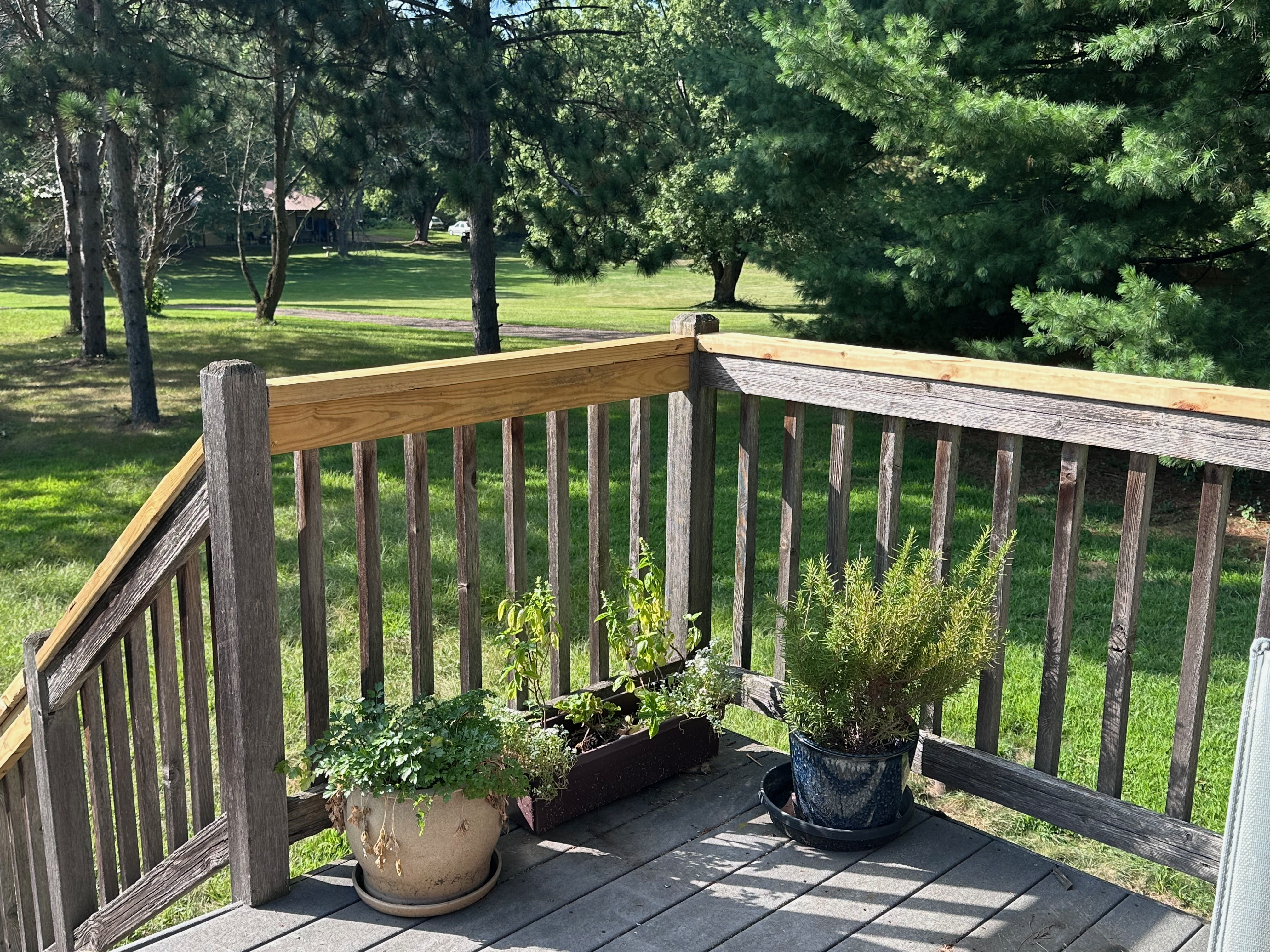
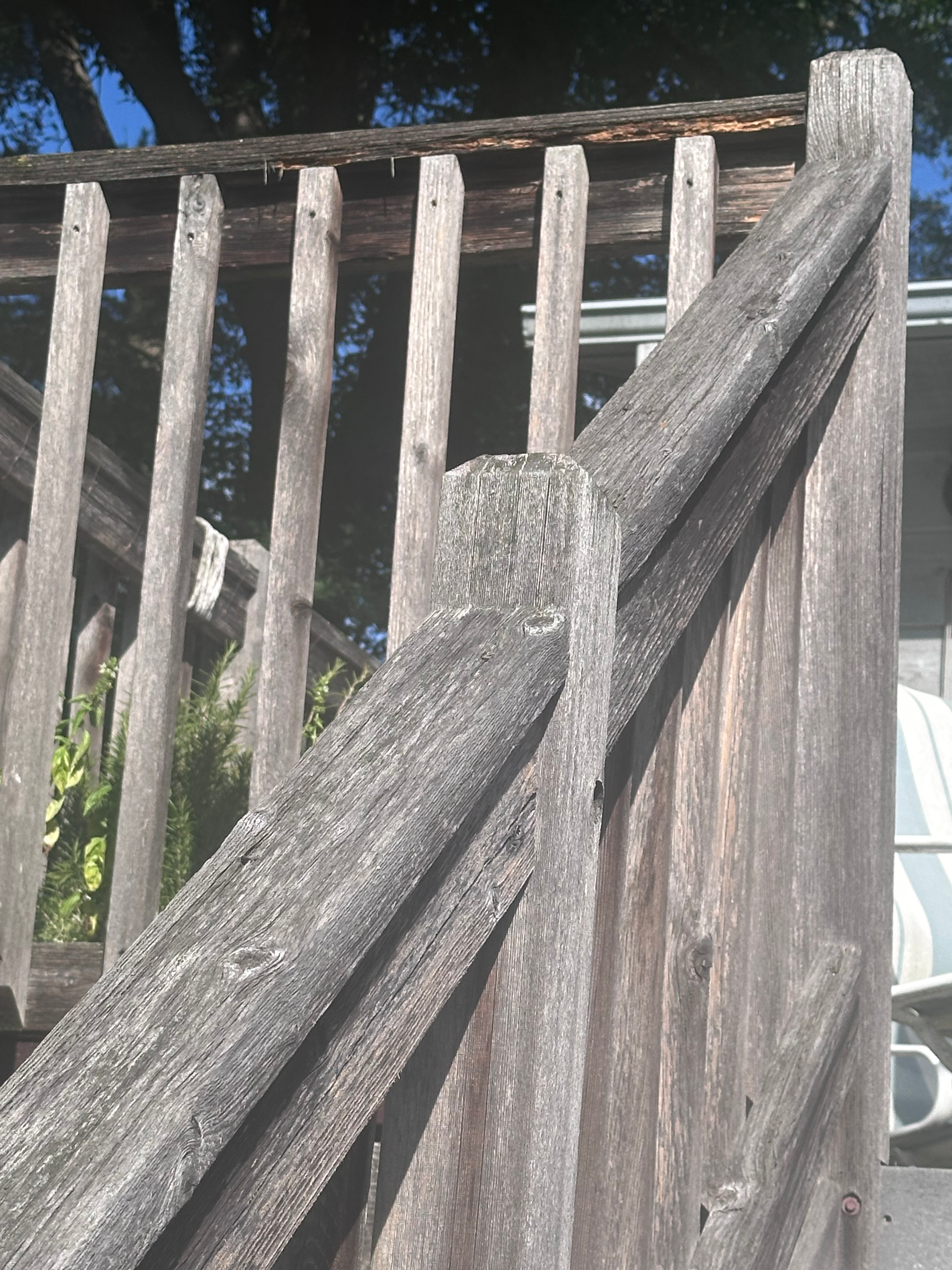
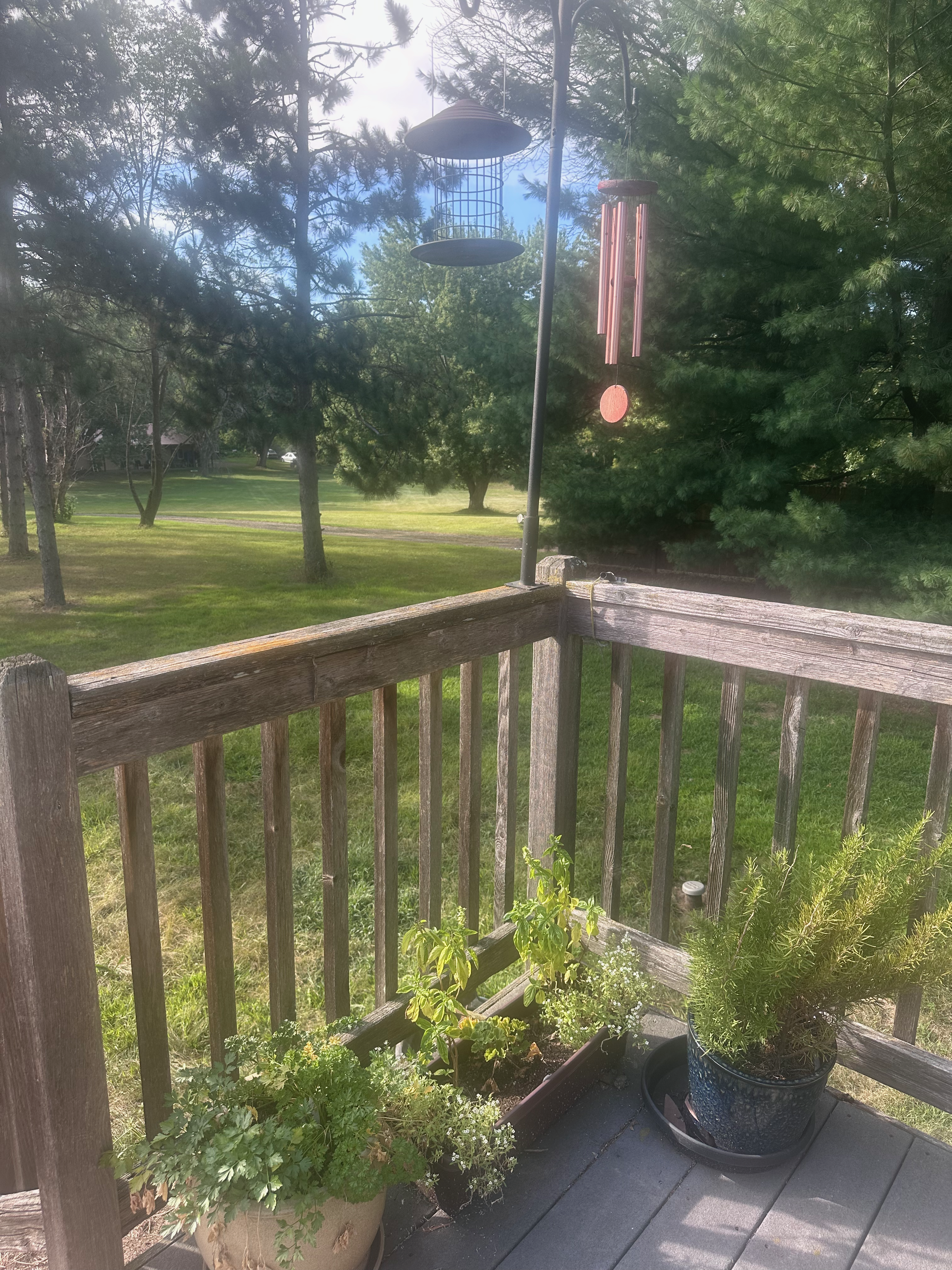
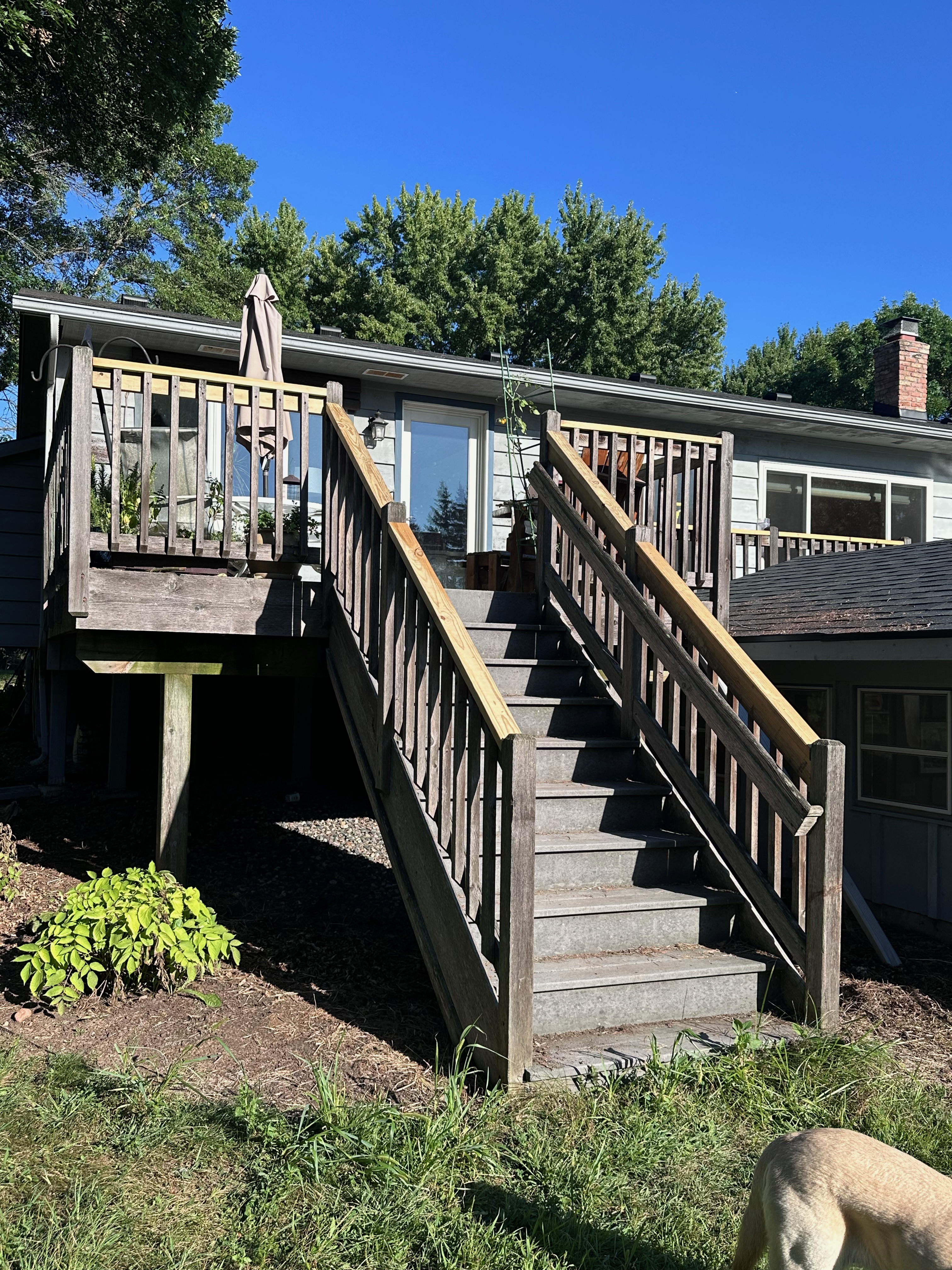
This Hudson, Wisconsin deck was about 15 years old. The decking itself was composite and still in serviceable condition, but the railing system was cedar that appeared to have gone many years without cleaning or treatment.
The cedar had weathered to a rough gray surface. More importantly, several of the top rails had become soft and punky from rot, and portions of the railing and stair handrails had loosened over time.
The homeowner wasn’t looking for a new deck or an entirely new railing system. The goal was simpler: replace the wood that was no longer sound, secure the loose railings, and get some more useful life out of what was already there.
What we found
Although some of the most exposed horizontal boards were deteriorating, much of the original cedar was still solid. The spindles in particular were in good condition.
That made replacing the entire railing unnecessary.
We removed and replaced the deteriorated boards and reinforced the loose sections of railing and stair handrail. Wherever the existing cedar was still sound, we left it in place.
Why we used treated lumber for the repairs
We considered replacing the damaged pieces with new cedar. But new cedar would have cost roughly four times as much as the treated lumber used for the repair.
Because the deck already contained 15-year-old weathered cedar, new cedar wouldn't have matched the existing railing anyway. The homeowner chose treated lumber as the more practical repair material.
The difference in color is noticeable right now, and that's intentional. We're not trying to disguise new wood as old wood.
Finishing it in two stages
The existing cedar will be cleaned, brightened and stained to restore its appearance and protect the wood that's still in good condition.
The new treated boards will be allowed time to weather before they're stained to blend with the rest of the railing. That finishing step is planned for next year.
The result
The important parts of this project weren't the boards we replaced. They were the boards we didn't have to replace.
Because most of the railing—and especially the spindles—was still serviceable, the homeowner was able to address the deteriorated and loose areas without paying for an entirely new railing system.
The repaired railing isn't new, and we don't represent it as new. It's an older railing that has had its failing components replaced, its loose areas secured, and its remaining useful wood preserved.
That's often the sensible approach with an aging deck: repair what's bad, keep what's good, and don't replace sound material just because some parts have reached the end of their life.